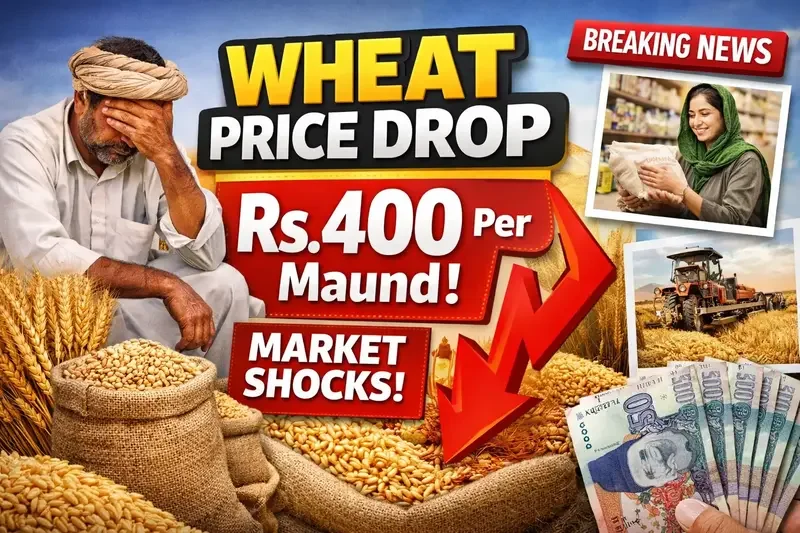
Pakistan’s wheat market has experienced a sudden and significant price drop, with wheat falling by Rs.400 per Maund. This unexpected decline has created mixed reactions, providing relief to consumers while raising concerns among farmers. As inflation continues to affect daily expenses, the sharp decrease in wheat prices has attracted the attention of traders, government authorities, and households nationwide.
The drop in wheat prices is primarily attributed to a larger-than-expected harvest, which increased supply across the country. Reduced government procurement from open markets has allowed market forces to dictate prices, further contributing to the decline. Limited storage capacity has forced farmers to sell wheat quickly to avoid spoilage, while competition among traders seeking available stock has intensified price pressure.
Farmers are facing financial difficulties as a result of this sudden price decline. Many small farmers are struggling to cover production costs, including seeds, fertilizers, and labor. Reduced wheat prices have squeezed profit margins, increased debt pressure, and created uncertainty for future planning. For many farmers relying on loans, the drop has made repayment more challenging and has heightened financial instability.
Consumers, on the other hand, may benefit from lower wheat costs. Falling wheat prices are likely to reduce the price of flour, helping to lower bread and other food costs. This could provide some relief against rising inflation and improve household budgets, particularly for low-income families. Greater wheat availability in markets may also make it easier for consumers to access flour and related products.
Wheat prices are determined by several factors, including the size of the harvest, supply and demand dynamics, government procurement policies, market competition, storage capacity, and the buying activity of flour mills. When supply exceeds demand and government buying slows, prices tend to fall. These factors, combined with storage pressures and active trading, have contributed to the current price drop.
The Ministry of National Food Security has clarified that market forces are the primary drivers of the price fluctuations. Authorities continue to monitor the situation closely and may take necessary steps to stabilize the market and support farmers if required.
The recent wheat price decline has created a complex situation in Pakistan. While consumers benefit from cheaper flour, farmers face income losses and market uncertainty. A balanced approach is needed to ensure affordable food prices for households while protecting the livelihoods of farmers. Staying updated through official government sources is essential for accurate information on wheat prices and related policies.