Supreme Court Clarifies Islamic Inheritance Shares, Upholds Cousin's Right to Residuary Estate
The Federal Constitutional Court has ruled that revenue records cannot override Islamic inheritance rights, clarifying how the remaining estate should be distributed among residuary heirs.
Get this story and every big update first on WhatsAppFollow the around.pk English News channel — free, no spam Follow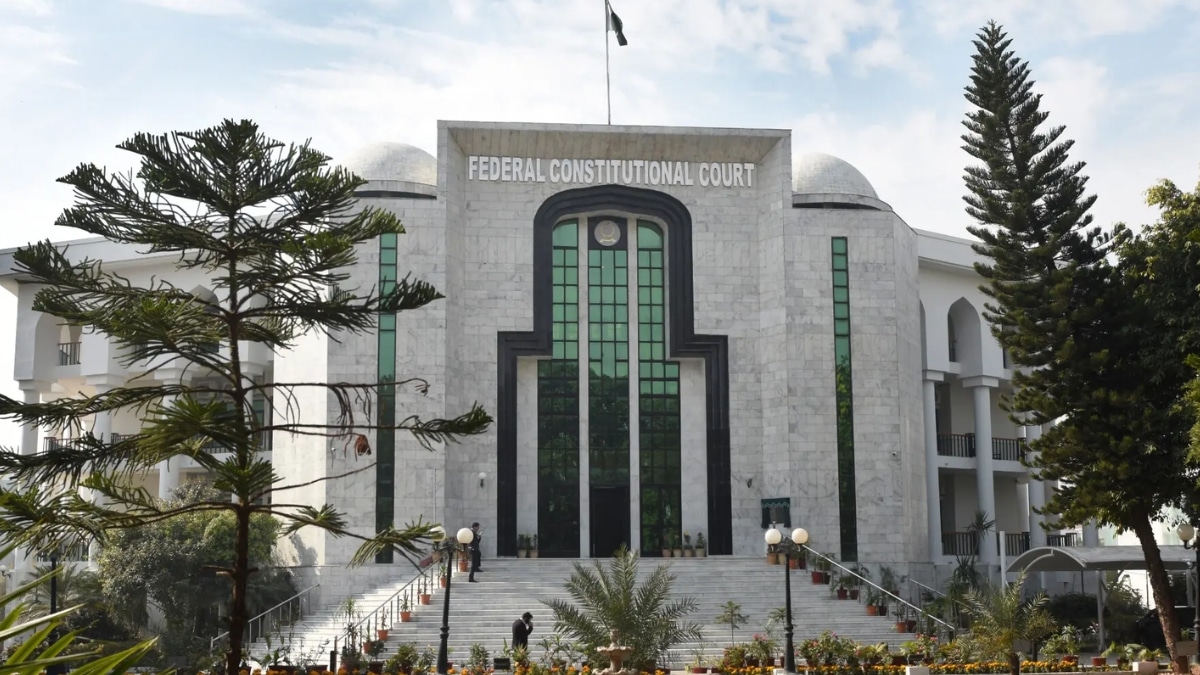
The Federal Constitutional Court has issued an 11-page judgment holding that inheritance records cannot be used to deny anyone their rightful share under Islamic law, and that property must be distributed strictly according to established legal categories rather than family ties or blood relationships alone.
Authored by Chief Justice Aminuddin Khan, the ruling upheld a Lahore High Court decision dated November 6, 2024, and dismissed appeals filed in a long-running property dispute. The two-member bench, which also included Justice Ali Baqar Najafi, concluded that the appellant had failed to show any legal error warranting interference with the High Court's findings.
The case concerned the estate of Muhammad Asghar. The court upheld the inheritance claim of his paternal cousin, ruling that after the prescribed shares were allocated, the remaining property passed to eligible residuary heirs, known in Islamic law as Asabah. According to the judgment, Asghar's widow is entitled to one-fourth of the estate, while his two full sisters are collectively entitled to two-thirds, leaving a one-twelfth share for the qualifying residuary heir.
The bench clarified that the principle of Radd, which permits redistribution of surplus property among certain heirs, cannot be applied where a legally entitled residuary heir exists. It also stressed that inheritance laws differ between the Sunni and Shia schools of thought, and that distribution must follow the Muslim personal law applicable to the deceased.
The judgment further emphasised that revenue records and procedural formalities cannot alter an individual's inheritance rights or give legal cover to an unlawful distribution of property. The ruling is expected to provide guidance in similar succession disputes where documentation has been used to justify excluding rightful heirs.
The story so far Supreme Court
- Supreme Court Gives CDA Six Months to Settle Land Compensation and Allottee Dues
- Supreme Court Sets Eight Grounds for Cancelling Bail in Landmark Judgment
- Supreme Court Rules Patient Death During Delivery Not Automatic Proof of Medical Negligence


