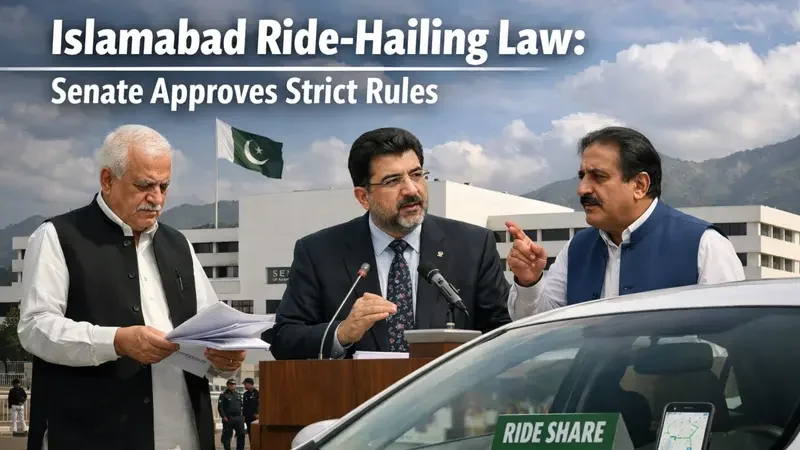
The Islamabad ride-hailing law introduces a formal regulatory framework for online ride-hailing services operating in the capital, approved by the Senate of Pakistan to improve safety, accountability, and transparency in the sector. Previously, ride-hailing platforms expanded without a clear legal structure, but the new legislation sets strict requirements for companies, drivers, and vehicles.
Under this law, no ride-hailing service can legally operate in Islamabad without obtaining an operational certificate from the designated regulatory authority. Companies must maintain complete records of registered drivers, keep updated vehicle documentation, and provide operational data to authorities when requested, ensuring transparency and enabling proper oversight of complaints, safety issues, or violations.
Drivers are required to register officially with the regulatory authority and cannot operate without registration. Eligible drivers must hold a valid driving license, obtain a special ride-hailing permit, and meet the standards set by regulators. This reduces unqualified operators and enhances passenger safety throughout the city.
Vehicles used for ride-hailing must also comply with strict regulations, including proper registration, annual fitness inspections, and adherence to safety and roadworthiness standards. Vehicles that fail inspections cannot be used on ride-hailing platforms until they meet compliance requirements.
The law addresses long-standing safety concerns, such as passenger risks, unaccountable drivers, and poorly maintained vehicles, while also organizing the rapidly growing ride-hailing sector under clear, enforceable rules. Passengers benefit from safer rides, verified drivers, and improved complaint-handling mechanisms, while drivers and companies gain clarity on legal requirements and professional recognition.
Authorities now have the power to penalize non-compliant companies, remove unregistered drivers, and suspend services violating the law. These enforcement measures ensure that the regulations are actively implemented and not merely symbolic.
Overall, the Islamabad ride-hailing law is a landmark move to regulate Pakistan’s digital transport ecosystem, establishing standards for safety, accountability, and transparency. Its successful implementation will benefit passengers, drivers, and companies alike, creating a professional and secure ride-hailing environment in the capital.