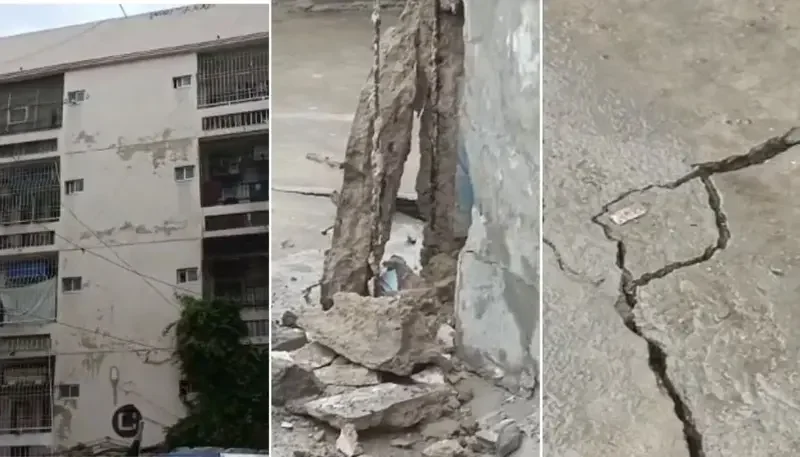
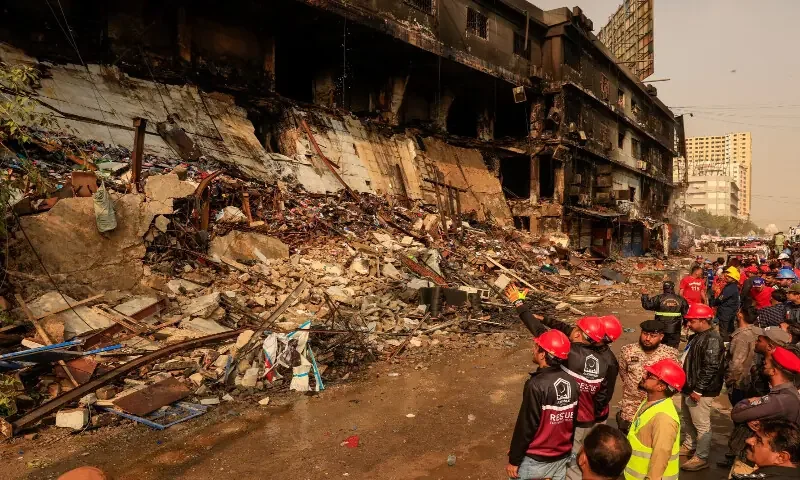
Documents dating back to 1992 reveal that Gul Plaza’s administrative committee had repeatedly warned authorities about widespread illegal constructions within the shopping center, cautioning that such violations could eventually result in a major tragedy. The committee formally notified the Karachi Municipal Corporation (KMC) Land Department and the Karachi Building Control Authority (KBCA) about nearly 200 unauthorized shops, including the unlawful conversion of the ground floor parking area into commercial spaces, which significantly compromised safety standards.
Records show that additional illegal structures were built on areas originally designated for washrooms, while corridors and entry/exit points were encroached upon, blocking emergency access routes. Despite repeated notifications over three decades, no effective action was taken. The administrative committee’s correspondence hinted at alleged bribery by officials, suggesting enforcement agencies deliberately ignored these violations. Documents indicate that although the KMC Land Department formally alerted the Building Control Authority, the KBCA failed to act. KMC officials now state that timely action in 1992 could have prevented the recent Gul Plaza tragedy, emphasizing that decades of negligence allowed illegal constructions to persist and put countless lives at risk.
An initial report on the Gul Plaza incident, submitted to the Sindh government on January 23, 2026, outlines a long history of land ownership disputes, lease violations, and regulatory failures spanning over a century. The land originally belonged to KMC and was leased in 1883 to the East India Company for 99 years for tram service operations. During the mayoral tenure of MQM leader Farooq Sattar, the land was leased to a private company, Jeneka, which purchased the Gul Plaza site one month before the original lease expired. Construction allegedly began and continued in violation of regulations, with the lease formally granted on November 3, 1991, under Farooq Sattar’s signature at a nominal rent of Rs 3 per square yard.
The report further notes that irregular construction continued without a valid lease from 1883 to 1990. Administrative inaction persisted under Jamaat-e-Islami mayor Abdul Sattar Afridi, who failed to halt construction despite evident violations. Additional floors were later regularized in 2003 during the tenure of mayor Naimatullah Khan, also from Jamaat-e-Islami. The findings highlight significant lapses in oversight and governance, indicating that illegal leasing practices and unauthorized construction were major factors contributing to the circumstances that led to the Gul Plaza tragedy.